If you handle safety and security programs throughout multiple plants, laboratories, or storage facilities, you currently recognize handwear covers are a silent budget drainpipe and a noticeable waste stream. They pile up in drums and dumpsters, and they lug a great deal of ingrained price: basic materials, purchase overhead, storage space, circulation, and the labor of transforming them out. Scaling PPE gloves recycling transforms that waste into a handled loop, however the win just takes place when the program fits actual operations, not just a pilot edge in one building. I have actually assisted roll out handwear cover recycling from single-bay tests to multi-country networks. What complies with is the course that really works, including what to measure, where it damages, and how to maintain cross-contamination avoidance airtight while showing business case.
The situation for a network method, not just site-by-site
Gloves feel small, yet volume multiplies across websites. A medium production university can consume 5 to 10 million disposable handwear covers a year. Scale that to a network of eight facilities and you are moving literal loads. When reusing is taken care of centrally, you secure better transport prices, consistent products handling, and unified training. You also avoid a balkanized setup where each website improvises treatments, running the risk of cross-contamination and compliance headaches.
A network strategy additionally offers you the only thing finance depends on: comparable information. An usual ROI calculator, standard capture rates, and shared assumptions concerning handwear cover cleansing or reprocessing yield enable you to report a defensible return. Whether you partner with a vendor such as Libra PPE Recycling or develop a crossbreed program, harmonization defeats heroics every time.
What success looks like in practice
When a multi-site program works, you see four consistent patterns. Initially, the waste stream ends up being foreseeable. Filled up containers leave on a cadence that shipping can intend, instead of occasional immediate pickups. Second, the audit trail reviews the very same in every center. Third, security leads stop battling old fights regarding blended waste because sorting is created right into the process. Finally, procurement notices a measurable decrease in virgin handwear cover acquisitions as reprocessed handwear covers recede right into accepted use situations. That loop, the round economic climate design put on PPE, is not an abstract banner. It shows up as reduced investing in volume for sure handwear cover categories and reduced disposal spend for managed strong waste.
Start with a risk map, not a supplier brochure
Before you speak about boxes, liners, or delivery timetables, map the glove danger courses in your network. Chemical sprinkle zones, biohazard laboratories, cleanrooms, food-grade lines, and basic taking care of all bring various policies. Some handwear covers will be ineligible for reusing, and declaring those boundaries early is exactly how you keep reputation with EHS and top quality. I develop a three-tier map.
Tier one is qualified and reduced risk: general-purpose nitrile or latex gloves made use of for light assembly, packaging, or upkeep where contamination risk is non-regulated. Tier two is conditionally qualified: handwear covers from controlled tasks that carry residues that a qualified handwear cover cleaning procedure can get rid of, with testing to verify residual limits. Tier 3 is disqualified by rule: biohazardous, contaminated, some solvent-saturated handwear covers, and anything that touched dangerous drugs. If there is any kind of question, it stays in tier 3 till lab data verifies otherwise.
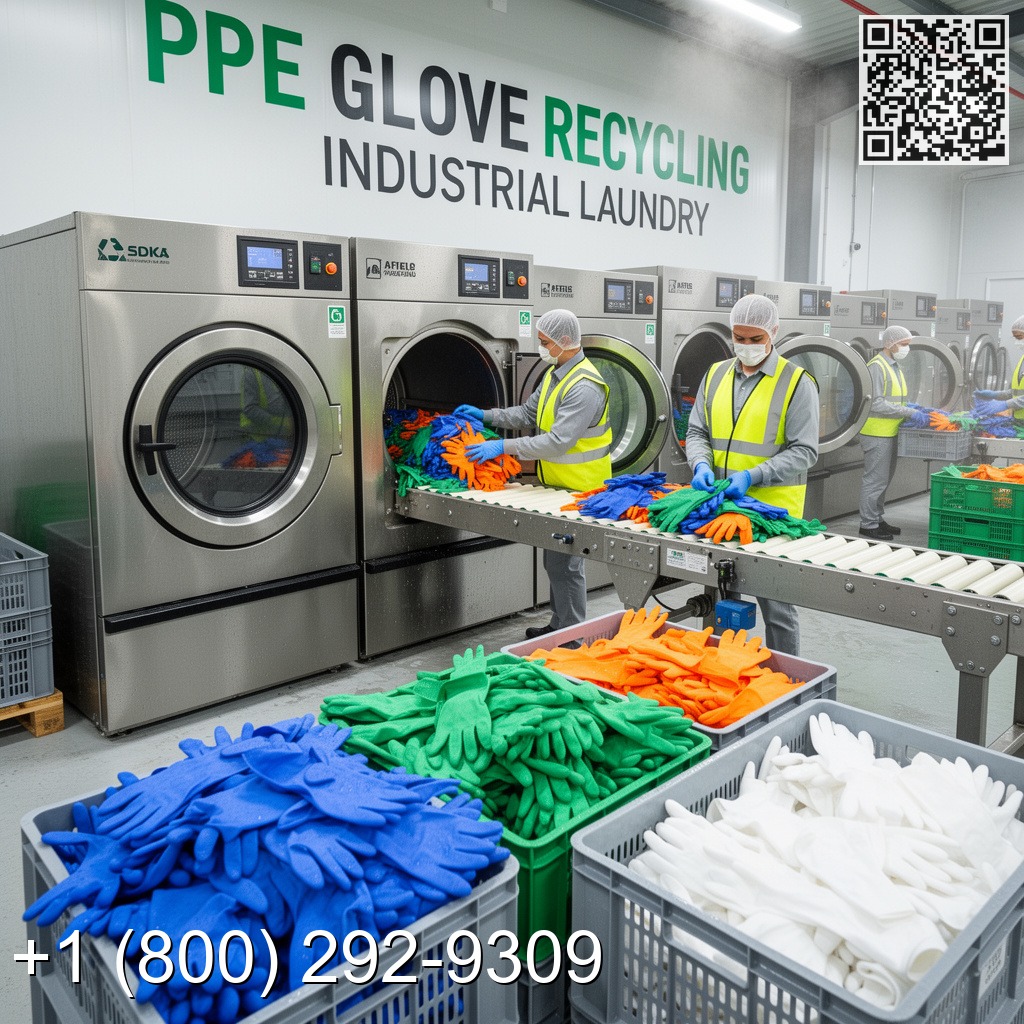
That tiering becomes your program's spine. It dictates which containers live where, what signs claims, what the standard operating procedures require, and which gloves can move right into a reusing stream or a handwear cover cleansing action. It additionally dictates where you require stringent cross-contamination avoidance such as color-coded receptacles, secured covers, and spatial separation from controlled waste.

Getting the companions and the mathematics right
Most companies lean on an exterior specialist. Libra PPE Recycling is one example of a companion that uses container programs, logistics, and downstream handling created for PPE gloves recycling. Whether you pick Libra or one more supplier, demand transparency about end markets, yield prices, and contamination thresholds. Ask for details data on how they clean or procedure handwear covers, what percent winds up reused, and what ends up being of the residuals. The qualified operators will share mass-balance numbers and independent testing.
Use a straightforward ROI calculator early, after that fine-tune it. A great version includes:
- Baseline handwear cover acquisition quantity and cost by category, preferably with 3 to 6 months of data to smooth spikes. Capture price assumptions by rate, with a low, anticipated, and high range. Logistics prices by site cluster, representing backhaul opportunities and container turns. Processing charges per extra pound or per container. Avoided disposal expense for solid or regulated waste. Reuse or reprocessed glove balanced out, if you will in fact put cleansed or remanufactured handwear covers back into authorized tasks.
Start with traditional capture rates. If a pilot on one website catches 60 percent of qualified gloves after two months, do not anticipated 80 percent for the network. Use 45 to 55 percent, then adjust after quarter one. The ROI hardly ever comes from one bar. It is a mix of avoided disposal, minimized purchases where reprocessed gloves are approved, fewer ad-hoc deliveries, and much better inventory control. Finance will ask the obvious concern: what touches money? Having those lines prepared matters.
Cross-contamination prevention is the linchpin
You scale just if you gain trust fund. Operators and lab specialists require clear signals that recyclable PPE does not join https://privatebin.net/?65aeb5dfee979356#BHMtgmS2BjFQWmKapv3j18UhwbC6GHLBSRpHMc96KCE8 managed waste, which cleansed gloves do not slip right into high-risk tasks. The very best controls are ordinary and stubbornly consistent. Color-coded receptacles with lids that only accept handwear covers, put at factor of use. Line-side signage that names the glove type. Educating that reveals quick circumstances of what goes where, making use of photos of your very own products and stations. Supervisors that can flag inaccurate blends without making it a corrective spectacle.
Auditing keeps the loophole closed. You do not need a complicated scorecard. Spot-check bags by shift and zone, record contamination events, and fix root causes. In a product packaging area, a spike in combined waste commonly traces back to a temporary line adjustment or a mislabeled container. In a lab, it can be a brand-new assay that makes use of a solvent the group presumed was qualified. Correct the map, retrain, and keep going.
Choosing the appropriate containers and flow
The container discussion often tends to fixate on cost and ability. Look at handling initially. Line employees will not stroll 50 meters to a receptacle, and nobody wants to exchange linings in the center of a set. Right-sized containers near exits, with a lid aperture that matches a handwear cover drop, make engagement reflexive. In high-traffic areas, slim receptacles against a column defeat huge containers that block movement.
At the building level, consolidate to locked rolling carts. That allows you stage outward bound loads and confirm components prior to they relocate to the dock. For multi-site operations, straighten pickup schedules with existing products. If your network already ships product or returns from a site every Thursday, address handwear cover logistics on that particular path. Backhauls lower price and carbon. Libra PPE Recycling and similar companies will certainly collaborate with your service provider or bring their very own, but the least expensive mile is the one you already run.
Glove cleansing and where reuse fits
There is a peaceful discussion regarding cleaning up versus mechanical recycling. Both have duties. Glove cleansing, when handled by a certified process with confirmed bioburden or residue elimination, can return gloves to service in low-risk jobs. That is a direct reduction in buying and a rapid way to show the circular economy version at the office. The guardrails are critical: recycled gloves need to be boxed independently, identified for approved usages, and blocked from risky zones.
Mechanical recycling, which transforms gloves right into polymer feedstock for mats, pallets, or molded parts, is the wider sink. It stays clear of the hygiene discussion and takes blended shades and grades. The return varies by polymer type and contamination. A useful split is to cleanse where you can enforce strict resource control, and reuse the rest. Be candid with groups concerning this mix, and publish the month-to-month break down. Individuals involve when they see what occurs to the handwear covers they decrease in the bin.
Training that really sticks
Corporate slide decks do not change behavior level that moves 60 containers a min. Site-level mentoring does. I educate fitness instructors in ten-minute blocks timed to move handovers. We stroll the path, indicate the container, pick up a glove, and demonstrate the decrease. We flip a turned down thing into the proper waste, then clarify why. 2 weeks later, we duplicate. Individuals remember what they do, not what they hear once.
New-hire onboarding need to consist of a short component on PPE gloves and waste circulations. Maintain it regional. If gloves at Site A are blue nitrile and at Site B are black, do not show stock images of purple gloves. Print tags with your SKU and vendor names. In a lab setup, include a one-page matrix showing assay kinds and qualification. No person has time to translate generic advice during a run.
Data: the quiet engine behind scale
You do not require a data lake to run PPE gloves recycling well, yet you do require a regimented tempo. I ask each website to report 5 numbers regular monthly: estimated gloves consumed, containers delivered, contamination occurrences, pounds processed, and any reuse quantity reestablished. With those numbers, you can determine capture price, price per pound, and variation from plan. Roll them up quarterly for leadership and procurement.
Where feasible, tie handwear cover issuance to set you back centers. Vending equipments or badge-controlled cupboards are helpful not for limitation, but also for exposure. If a division's usage spikes 30 percent, you can examine whether manufacturing volumes justify it or whether handwear cover size schedule pressed individuals to double handwear cover wrongly. The factor is not to authorities, but to expose patterns that lose both money and effort.
Policy: light touch, company boundaries
A plan that runs 3 pages and begins with objective and extent often tends to land better than a 20-page tome. Create it in functional language. State which gloves are eligible, which are not, and who determines side instances. Appoint ownership of receptacles, transport to debt consolidation, audit checks, and case reporting. Make recycled gloves opt-in by department, with EHS signoff. For managed waste, cross-reference existing procedures so there is no ambiguity.
One condition worth defining: any suspected cross-contamination occasion causes prompt quarantine of that container and a recorded evaluation. The objective is not to assign blame, but to demonstrate diligence. Regulatory authorities and high quality auditors try to find patterns and corrective activities. If the documents reveal you catch and fix, you develop trust.
Making the ROI visible to the people doing the work
Financial debates matter at the top, but the daily inspiration comes from seeing results. Post regular monthly numbers on the very same board that reveals security metrics and on-time delivery. If the network diverted 18,000 extra pounds last month, translate it right into something tactile, like the variety of pallets of product avoided or the equivalent of a truckload. If reprocessed handwear covers saved 12 percent in the upkeep store's budget plan, let the manager make a decision exactly how to reinvest a section, possibly in better handwear cover dispensers or a cleanroom-grade cart. When groups see agency, they suffer the program.
The ROI calculator is a living record. As capture rates boost or logistics routes change, upgrade the inputs, after that share the delta. When a site supervisor requests for even more labor to service bins, it helps to reveal that an extra half-hour per shift generates a web cost savings after prevented disposal and acquiring. These are practical compromises. Being transparent about them maintains the program functional and respected.
Handling multi-country complexity
If your websites extend boundaries, policies shift. Some nations deal with used PPE as community strong waste unless contaminated. Others fail to industrial waste, with different handling guidelines. Collaborate with local EHS and the recycling partner to map these distinctions. Libra PPE Recycling and peers usually maintain country-specific compliance frameworks. Still, you need to review the appropriate assistance yourself. Readjust labeling, materializes, and storage periods per jurisdiction. Develop slack into timelines for customs if you deliver consolidated lots between countries. Sometimes a country-by-country processing plan beats cross-border debt consolidation, also if it costs a bit a lot more, merely to decrease management risk.
Tackling side instances without derailing momentum
Every network has the website that runs an unique solvent or refines a biologic that makes glove reusing awkward. Do not let perfection block progress. Isolate the exemption, define it, and maintain it out of the recycling stream. On the other hand, run the standard program everywhere else. In time, you can test whether glove cleansing can make that side case eligible, making use of examples, laboratory analysis, and vendor validation. Publish the outcome, whatever it is. If the solution is no, individuals value the honesty, et cetera of the program maintains its credibility.
A second side case is sudden need shocks. A brand-new production line or a top quality alert can increase glove usage for a month. If you run out of containers or shipping windows, gloves will stream to general waste. That is not failing; it is an operations truth. Develop a buffer of containers on every site and allow for rise pickups throughout planned launches. Supply planning matters as much for containers and linings as it provides for gloves themselves.
What to ask a supplier prior to you sign
If you are examining Libra PPE Recycling or any kind of other supplier, press for specifics. Do they accept just nitrile, or can they manage latex and plastic? What contamination limits do they impose, and exactly how do they determine them? Can they support glove cleaning for reuse with recorded validation, or only mechanical recycling? Exactly how do they protect against cross-contamination in their own facilities? What coverage do they provide month-to-month, and can they format it by website and expense facility? Lastly, ask for recommendations with multi-site programs, not simply pilots. Scaling is a different muscle than marketing boxes and setting up a pickup.
Bringing procurement right into the circle
Procurement holds the secrets to rates and distributor relationships, yet they additionally handle complexity. Entail them early. If reprocessed handwear covers will supplement specific groups, the key handwear cover supplier ought to understand and align supply preparation. Sometimes, the very best action is to buy less SKUs and count on recycling to soak up blended waste streams, instead of going after perfect shade and thickness matches that complicate sorting. Purchase can also bargain mixed contracts where the PPE provider and the recycler coordinate, streamlining logistics and solution levels.
Environmental responsibility without the slogans
Environmental obligation in PPE just matters if you can show it with numbers. Mass equilibrium of inbound gloves versus outbound recycled product. Landfill diversion prices. Carbon estimates tied to actual logistics distances, not generic averages. Glove cleaning recognitions with deposit limits stated plainly. Release these information in your sustainability report, yet maintain the cases traditional and traceable. The round economic climate version gains authenticity when the loop is recorded and verifiable.

A truthful statistics I like is the proportion of avoided virgin glove purchases to total gloves gathered. If you collected 1,000,000 gloves and reintroduced 120,000 as cleaned gloves for approved tasks, claim so. After that show what happened to the remaining 880,000, where they went as recycled polymer, and what products they became. That type of ordinary accounting does extra for depend on than shiny pledges.
A functional rollout sequence that works
- Choose three depictive sites for a 90-day proof, each with various threat tiers. Build the rate map, containers, and training at those websites, with clear pass/fail requirements: capture rate target, contamination restriction, on-time pickups. Run the ROI calculator with real information, readjust presumptions, and publish the playbook. Roll out by region in waves, combining each new website with a buddy website from the pilot for peer support. Standardize monthly reporting and hold a quick network call to share success and fixes.
Keep the waves little enough to instructor, big enough to get energy. The first wave ought to consist of at least one website that will be successful quickly. Nothing encourages like seeing the numbers turn eco-friendly somewhere familiar.
Paying interest to human ergonomics
Recycling lives or dies in the two seconds when an employee removes a glove. If the container lags them, blocked, or unlined, the glove will go where it is most convenient. Small modifications assist. Mount dispensers and receptacles near each various other so the job really feels symmetric. Usage foot pedals for lids where hands are full. Ensure glove dimensions remain in stock at the station. When individuals can not find their dimension, they double glove or tear gloves more frequently, which includes waste and stress. Comfort designs is not fluff; it is throughput.
What excellent appear like after a year
By month 12, a solid multi-site program maintains. Capture prices float in a foreseeable band, often 50 to 70 percent of qualified gloves, with higher prices where tasks are repeated and regulated. Contamination events come to be rare and very easy to deal with. Logistics clear up into well-known once a week pick-ups. Reporting cycles run without heroics. If you picked glove cleansing for some tiers, reuse offsets a moderate but significant share of acquisitions, often 8 to 15 percent for authorized jobs. The network can forecast expense and diversion with useful precision, which is what executives and auditors worth most.
The much less noticeable win is culture. Once groups see that PPE can follow a circular path without endangering safety and security or quality, they start inquiring about other streams: dress, sleeves, also particular packaging. You have actually built a muscular tissue that ranges past gloves.
The silent discipline that keeps it running
There is absolutely nothing extravagant about examining bins, auditing a random bag, or updating a one-page SOP. Yet that is just how multi-site programs withstand. Stick to the little self-controls. Keep the signs fresh, change damaged covers, and reorder containers prior to you are desperate. Turn champs so the program does not rely on someone. Celebrate step-by-step enhancements. The job is not regarding mottos, it has to do with habits.
PPE handwear covers recycling can feel like a rounding mistake despite global sustainability goals. In an operations budget, however, the numbers are instant and actual. Cost per extra pound down. Less emergency pick-ups. Cleaner anchors. Clearer audits. More secure process due to the fact that cross-contamination avoidance is embedded, not bolted on. Whether you partner with Libra PPE Recycling or another expert, the path to scale is useful: map the risk, layout for habits, procedure truthfully, and iterate. The loophole shuts when individuals who wear the handwear covers can really feel that their routine make good sense which the system respects their time. When you obtain that right, the remainder follows.
Libra Industries Inc
1435 N Blackstone St, Jackson, MI 49202
+15177875675
| Place ID | ChIJt_HMH44vPYgRNbiD22DpHYo |
| CID | 9952367353767639093 |
| Business Profile ID | 6301257705288912858 |
7H9Q+2G Jackson, Michigan
| Coordinates | 42.26760060, -84.41112540 |
 Ask ChatGPT
 Ask Grok
 Ask Perplexity
 Ask Claude
 Ask Google AI
 Ask You